This website had been restored and archived as required reading form Ryan Burke's Film Studies course: Documentary Production. Dr. Burke is a principal in the Format X, the digital promotion agency best known for their cutting edge viral videos including "Sucking Up" for the robot startup Vacuu, which won the Blue Ribbon for best informative promotional in 2013. TNG/Earthling's Bob Sakayama teamed up with Burke and were awarded a Web Archive Project grant to preserve and restore the site's content. Rev Sale, also from TNG/E, handled research responsibilities. Students can download the full syllabus and reading list from the film department's website.
Ok, allow me to stop the inside jokes for a minute and give you a proper welcome.
Hello.
Stay awhile.
Come back soon.
This is a blog that chronicles the journey of a documentary film. The documentary film, BRAVE NEW WILD, chronicles the people who have journeyed up rocks and into mountains. The mountains are the chronicle of time, beckoning those whose live for adventure.
The current website for the film Brave New Wild is found at: www.bravenewwild.com
“Cool, young, sexy. ” - TeenBeet, USA
More Background On RockAdventureMovie.com
RockAdventureMovie.com was the production diary for an unusually ambitious independent documentary about the origins, personalities, values, and contradictions of American rock-climbing culture. Active primarily between 2008 and 2011, the website followed filmmaker Oakley Anderson-Moore and her collaborators as they traveled across the United States, interviewed legendary climbers, searched for archival material, pursued financing, endured equipment and transportation problems, and gradually transformed an expansive historical idea into a completed feature film.
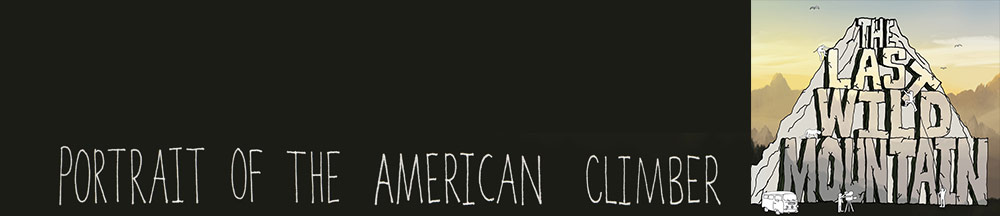
The documentary changed names several times as its direction became clearer. It was initially discussed as The Rock Adventure Guide, later promoted as The Last Wild Mountain: Portrait of the American Climber, and ultimately released as Brave New Wild. The evolution of those titles reflected the filmmakers’ growing understanding of their subject. What began as a broad exploration of mountain culture became a more personal, unconventional history of the people who created modern American rock climbing.
RockAdventureMovie.com was therefore more than a conventional promotional website. It was a public production notebook, travel journal, fundraising platform, historical scrapbook, and informal gathering place for people interested in climbing’s past. Its archived posts preserve the early stages of a documentary that required approximately seven years of filming, research, editing, fundraising, and archival work before reaching audiences.
The Filmmaker Behind the Website
RockAdventureMovie.com was closely identified with Oakley Anderson-Moore, the documentary’s director, writer, and eventual editor. Anderson-Moore graduated from the University of California San Diego in 2007 with a film degree and began pursuing the climbing documentary soon afterward.
Her interest in the subject was personal. Her father, Mark Moore, had spent years immersed in the itinerant climbing culture of the 1960s and 1970s. He climbed, traveled by freight train, picked fruit for money, and lived outside many of the expectations associated with a conventional career and household. Anderson-Moore grew up hearing stories about that life and learning to climb herself.
Those family stories gave her access to climbing history from a perspective different from that of a sports journalist or outside documentarian. She was not simply trying to explain how difficult routes were completed. She wanted to understand why people chose climbing when it offered little financial reward, considerable physical risk, unstable living conditions, and no obvious place within mainstream society.
The discovery of her father’s old video recordings helped give the eventual film its personal structure. Instead of presenting climbing history as a detached chronology of routes and technical achievements, Anderson-Moore used home movies, memories, and conversations with her father’s generation to explore the psychological appeal of climbing.
RockAdventureMovie.com allowed readers to follow that inquiry before it had a final form. Anderson-Moore wrote with humor and openness about her family history, filmmaking ambitions, financial uncertainty, and affection for climbing’s unusual personalities. That voice became one of the site’s defining features.
From The Rock Adventure Guide to The Last Wild Mountain
The earliest concept appears to have been known as The Rock Adventure Guide. The name suggested a journey through climbing places, personalities, stories, and traditions rather than a straightforward historical documentary. Early website posts discussed traveling to prominent climbing areas, interviewing important figures, and recording stories in atmospheric outdoor settings.
As the filmmakers gathered more interviews, the project became known as The Last Wild Mountain. Under that title, it was described as a portrait of the American climber and an examination of climbing as a social movement. The emphasis was no longer simply on mountains or climbing accomplishments. It was on people who treated climbing as a rejection of ordinary expectations.
The film’s subjects included people associated with several generations and regional cultures. The documentary explored the Vulgarians of the Shawangunks in New York, pioneering Yosemite climbers, the Stonemasters of California, and other nomadic or countercultural climbers who traveled among mountain areas.
The final title, Brave New Wild, captured the film’s mixture of historical transformation, personal discovery, risk, independence, and nostalgia. It also distinguished the completed feature from a more conventional mountain-adventure film. The documentary was not primarily about a single expedition, athlete, route, or summit. It was about the creation of a culture.
A Website Designed as a Film Diary
RockAdventureMovie.com used a blog format that suited the uncertain, evolving nature of independent documentary production. Rather than waiting until the film was complete to create a polished marketing campaign, Anderson-Moore documented the work as it occurred.
Posts described research trips, interviews, climbing events, trade shows, fundraising efforts, transportation problems, campground encounters, crew dynamics, equipment needs, and the challenge of locating historical photographs and film. Readers could see the distance between a compelling documentary idea and a finished feature.
The site’s tone was informal, irreverent, and often self-deprecating. Anderson-Moore did not pretend that the crew had abundant resources or an efficient studio operation. Their working conditions became part of the story. They slept in campgrounds, parking areas, borrowed rooms, and a Volkswagen van. They drove long distances, improvised production arrangements, and tried to persuade sponsors and supporters that a documentary about climbers from previous generations deserved to be finished.
That presentation closely matched the culture being documented. Early American climbers were frequently celebrated for improvisation, independence, limited finances, and resistance to authority. The filmmakers’ production journey unintentionally echoed the dirtbag climbing lifestyle of their subjects.
Beasty, the Volkswagen Production Vehicle
One of the website’s most memorable recurring characters was a 1976 Volkswagen van called Beasty. The crew jokingly expanded the vehicle’s role into the “Home Operations Traveling Resource of Destiny.”
Beasty was transportation, lodging, production office, equipment carrier, kitchen, and symbol of the project’s identity. The filmmakers planned to travel thousands of miles in the van while interviewing climbers across the country. They also explored adding solar power so that film equipment could be charged on the road.
The Volkswagen had cultural meaning beyond transportation. Vans had long been associated with climbers who wanted to live inexpensively near climbing areas. A van reduced the need for rent, allowed its owner to move among seasonal destinations, and offered just enough shelter for a life organized around climbing rather than employment or property.
RockAdventureMovie.com repeatedly used Beasty to connect the production crew’s travels with the larger history they were documenting. The van also produced some of the diary’s funniest and most frustrating episodes. Mechanical limitations, slow travel, campground restrictions, police encounters, uncomfortable sleeping arrangements, and questionable food became part of the website’s ongoing narrative.
Traveling Through America’s Climbing Regions
The production was national in scope. Website posts documented or anticipated travel through California, Colorado, Utah, Wyoming, Nevada, New York, New Hampshire, and other areas associated with American climbing.
Yosemite National Park was especially important. Yosemite Valley, Camp 4, Half Dome, El Capitan, and the development of big-wall climbing were central to the film’s history. The crew interviewed climbers connected with Yosemite’s most influential decades and attempted to capture the atmosphere surrounding the place.
The Shawangunks, commonly called the Gunks, represented another essential branch of climbing culture. Located near New Paltz, New York, the cliffs became associated with the Vulgarians, a group known for strong climbing, satire, provocative behavior, intellectual humor, and resistance to respectability.
Colorado provided access to another concentration of prominent climbers and climbing institutions. The production diary mentioned interviews with figures such as Lynn Hill, Tommy Caldwell, Jim Erickson, Cam Burns, and Josh Wharton. Boulder, Estes Park, Rifle, and other Colorado locations gave the crew opportunities to explore both historical and contemporary climbing communities.
Salt Lake City also played a practical role because the Outdoor Retailer trade show brought together companies, athletes, publishers, filmmakers, and organizations from across the outdoor industry. The filmmakers used the event to pursue partnerships, financing, exposure, and industry contacts.
An Extraordinary Collection of Interviews
One of the project’s greatest strengths was the scale of its interview research. Contemporary reports said Anderson-Moore and her crew interviewed more than 50 influential climbers. The names associated with the project span several generations of American climbing.
Among those featured or interviewed were Royal Robbins, Warren Harding, Tom Frost, Allen Steck, John Gill, Lynn Hill, Tommy Caldwell, Ron Kauk, John Bachar, Yvon Chouinard, Doug Robinson, Jim Donini, Henry Barber, John Bragg, Don Lauria, Tom Higgins, Sybille Hechtel, Jim Erickson, and others.
This collection gave the filmmakers access to people who had participated directly in the events they were discussing. It also allowed the documentary to preserve the voices of climbers whose memories might otherwise have survived only in specialist books, magazines, guidebooks, or informal campfire stories.
The film’s historical value increased as members of the pioneering generations aged. Climbing Magazine later identified Brave New Wild as a particularly necessary film because it preserved interviews, photographs, footage, illustrations, and memories from a period whose central figures were beginning to disappear.
Campfire Interviews and the Importance of Storytelling
RockAdventureMovie.com explained that many interviews were conceived as campfire or lantern-lit conversations. This was not merely a visual gimmick. Anderson-Moore believed the setting reflected how climbing culture had traditionally preserved its history.
Before digital media made information instantly available, climbers often learned about routes, accidents, personalities, rivalries, and legendary achievements through oral storytelling. Campgrounds such as Camp 4 were places where climbers cooked, exchanged advice, found partners, played music, argued, and retold stories.
The campfire lighting also supported the documentary’s themes. Faces partly illuminated and partly hidden suggested the mixture of fact, exaggeration, memory, and mythology surrounding climbing legends. Rather than filming every participant in a neutral office, the production tried to create the atmosphere of stories passed among travelers.
A later review noted that the filmmakers used flickering light to reproduce the feeling of fireside conversation. This stylistic choice helps distinguish Brave New Wild from documentaries dominated by conventional talking-head interviews.
The Golden Age of American Rock Climbing
The completed film concentrated on what it called the Golden Age of American rock climbing, particularly the decades before and after the controversial 1970 ascent of Yosemite’s Dawn Wall by Warren Harding and Dean Caldwell.
This history involved more than athletic progress. Climbers developed new equipment, new techniques, new ethical codes, and new ideas about what constituted a legitimate ascent. Conflicts over the use of bolts, fixed ropes, siege tactics, pitons, and cleaner methods were also conflicts about values.
The rivalry between Royal Robbins and Warren Harding became one of the period’s defining narratives. Robbins was associated with discipline, style, restraint, and influential climbing ethics. Harding was associated with persistence, irreverence, spectacle, and refusal to accept other people’s rules. Their differences gave the documentary a way to examine competing definitions of freedom.
The film also expanded beyond Yosemite. The Vulgarians brought a satirical East Coast sensibility, while later Stonemasters represented another transformation in climbing identity, athleticism, and youth culture.
Climbing as Counterculture
One of RockAdventureMovie.com’s central goals was to examine climbing as a social choice. Many of the pioneers did not see climbing simply as a recreational activity performed during vacations. They organized their lives around it.
Some rejected conventional employment, stable housing, consumer expectations, and status. They lived in vehicles, campgrounds, temporary quarters, and seasonal work arrangements. They picked fruit, hopped freight trains, shared food and equipment, and traveled in search of unclimbed or difficult rock.
This lifestyle connected climbing with broader postwar countercultures. The rise of modern American climbing overlapped with dissatisfaction toward conformity, suburban expectations, institutional authority, and material definitions of success.
The film did not treat every climber as a political activist. Instead, it showed how the act of abandoning conventional ambitions could itself have social meaning. Climbing offered a community where skill, nerve, ingenuity, and commitment mattered more than professional credentials or possessions.
Humor, Delinquency, and the Vulgarians
RockAdventureMovie.com frequently highlighted the humorous and delinquent side of climbing history. One archived story concerned Joe Kelsey and Claude Suhl being arrested during a tense period in Yosemite after the 1970 Stoneman Meadow riot.
The episode involved singing climbers, park rangers, mistaken identity, an unexpected lawyer, a crowd outside the courtroom, and allegedly stolen mugshots. The story exemplified the kind of climbing folklore the project wanted to preserve: partly historical testimony, partly comic performance, and partly criticism of authority.
The Vulgarians were especially useful in this respect. Their publications, cartoons, jokes, pranks, and deliberately disreputable image challenged the tendency to portray climbers as solemn heroic figures. Their presence helped the film remain playful even when discussing danger, sacrifice, and cultural conflict.
The completed documentary continued this approach through animated cartoons, eccentric archival images, original music, and interviews that allowed personalities to remain vivid rather than reducing participants to historical names.
Financing an Independent Documentary
RockAdventureMovie.com also documented the difficult economics of feature-length documentary production. Travel, camera equipment, sound recording, archival licensing, editing, animation, music, insurance, festival submissions, and distribution all required money.
The project sought industry sponsors, grants, donations, and crowdfunding. Anderson-Moore had received early support connected with Banff and used meetings at outdoor-industry events to introduce the project to possible partners.
In late 2010 and early 2011, the production ran a Kickstarter campaign under the title The Last Wild Mountain: A Nearly-Finished Rock Doc. The campaign set a goal of $10,000 and exceeded it. Website updates reported totals rising above $13,000 before the campaign ended.
The campaign did more than supply finishing funds. It demonstrated that an audience existed for a historical climbing documentary and gave supporters a sense of participation in the project. Rewards included items such as buttons, film-related merchandise, acknowledgments, and advance access.
The site’s fundraising appeals maintained its humorous tone. Anderson-Moore joked about selling the documentary as a future Oscar contender and offered deliberately exaggerated reasons to contribute. The approach made financial need part of the site’s personality rather than hiding it behind formal corporate language.
Completion as Brave New Wild
After years of production and hundreds of hours of postproduction, the documentary was completed as Brave New Wild. The final feature runs approximately 75 or 76 minutes and credits Anderson-Moore as director, writer, and editor. Alexander Reinhard was a key producer, with additional production credits associated with Paul Blair and Adam Keleman. Nick Louie handled cinematography, while Mark Bertuldo and Bradley Carter were credited with music.
The finished film combined contemporary interviews, family videos, historical footage, photographs, animated illustrations, route graphics, original music, and personal narration. It did not attempt to catalog every major ascent or climber. Instead, it used selected stories to explore why climbing became an all-consuming way of life.
That distinction explains why comparisons with other historical climbing films only go so far. Brave New Wild is less concerned with constructing a definitive chronology than with capturing a cultural attitude and a daughter’s attempt to understand her father.
Film Festivals and Awards
Brave New Wild entered the festival circuit in 2014. It screened at the Woods Hole Film Festival in Massachusetts on July 26, 2014, where Oakley Anderson-Moore received the festival’s Emerging Artist Award.


